The Agent Operating System Arrives: What Microsoft's Project Solara Means for Apps vs. Agents
The Agent Operating System Arrives: What Microsoft's Project Solara Means for Apps vs. Agents
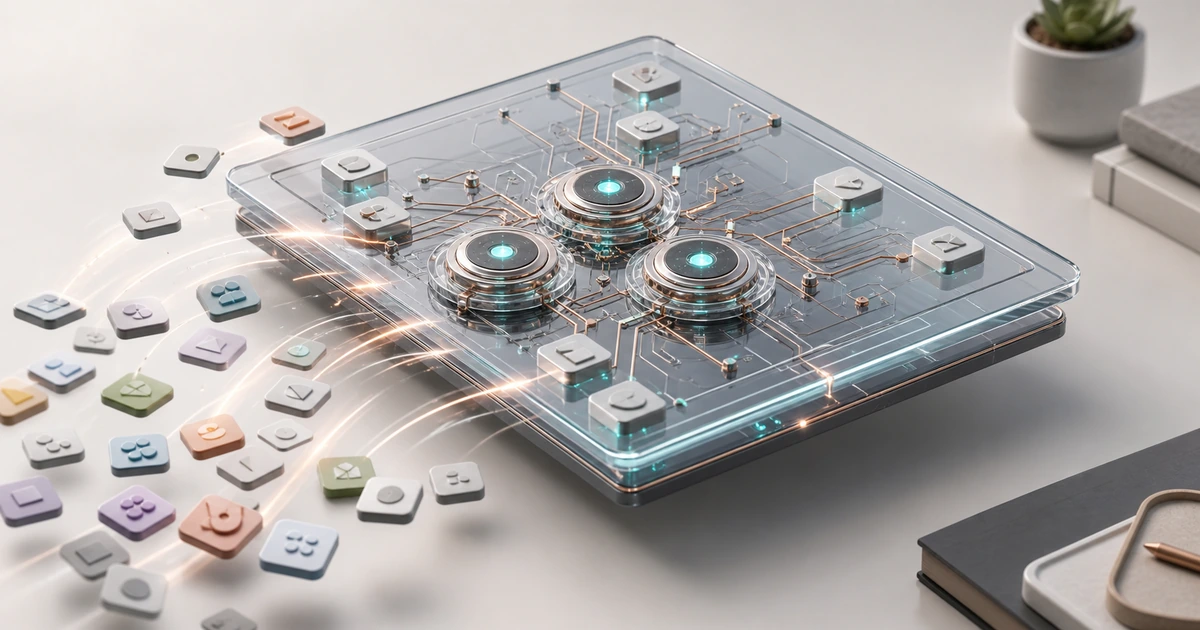
For forty years the operating system has organized your computer around one idea: applications. You open an app, the app owns a window, and you do the work by hand. Microsoft's Project Solara proposes something different — an agent operating system that organizes the device around agents that act on your behalf instead of around apps you operate yourself. According to Ars Technica, Solara is an Android-based OS designed for agents rather than apps, and that single design choice is why this is worth more than a one-day headline. It signals that a major platform now believes the next computing layer reorganizes itself around what software does for you rather than what you do with software.
This post explains what an agent operating system is, what Microsoft has actually announced, why the apps-vs-agents framing matters, and what builders should take from it. The goal is to separate a durable category shift from launch-day noise.
What is an agent operating system?
An agent operating system is a platform whose primary unit is the agent — an autonomous or semi-autonomous piece of software that takes a goal, plans steps, and carries them out — rather than the application, which waits for a human to drive every action. In the app model, you are the orchestrator: you open the calendar, copy a detail, switch to email, and paste it. In the agent model, you state the outcome and the system coordinates the steps.
Project Solara is the clearest mainstream expression of that idea so far. As Ars Technica reports, it is an Android OS built so that agents — not apps — are the things the system is designed around. That is a structural claim, not a cosmetic one: it changes what the OS treats as a first-class citizen.
What has Microsoft actually announced?
Two pieces of news anchor this shift, and it's worth keeping them distinct:
- Project Solara — an Android-based operating system designed for agents instead of apps, per Ars Technica (June 2, 2026).
- Scout — a personal assistant that TechCrunch describes as "OpenClaw-inspired," launched by Microsoft (June 2, 2026).
The pairing is the story. An OS designed around agents needs an agent for users to actually talk to, and Scout is that front door. Reported together on the same day, they read as two halves of one bet: rebuild the platform layer for agents, then ship an assistant that lives natively on it.
Why is Microsoft betting on agents now?
The competitive backdrop explains the timing. The Verge reports that Microsoft and OpenAI — once tightly aligned — have effectively split, and that Microsoft is now building its own AI agents in direct competition with OpenAI. When two former partners start competing, each needs an independent stack it controls end to end. An operating system designed around agents is about as independent and defensible as a platform bet gets: it is hard to copy, hard to dislodge once developers build on it, and it sets the terms for everyone who ships agents on top.
In other words, Solara isn't only a product decision. It's a positioning move in a newly competitive market, and that's part of why it's more likely to stick than a typical feature launch.
Apps vs. agents: what actually changes?
The phrase "apps vs. agents" is easy to wave away as marketing, so here is the concrete difference for the people who build and use software.
The unit of interaction changes. In an app-centric OS, the human is the integration layer — you move data between apps by hand. In an agent-centric OS, the agent is meant to do that coordination, so the user expresses intent ("reschedule this and tell the attendees") instead of performing each step.
The unit of distribution may change. App stores are built to distribute apps. A platform organized around agents raises an open question the industry hasn't answered yet: how are agents discovered, permissioned, and trusted? That's an unsettled area, and any builder paying attention should watch how Microsoft handles it on Solara rather than assume today's app-store mechanics carry over.
The unit of trust changes. An app does what you click. An agent does what it decides is needed to reach a goal — which makes permissions, oversight, and predictable behavior central rather than optional. A system that lets software act on your behalf raises the stakes on getting control and accountability right.
Is this a real category shift or just news?
A useful test for any platform announcement: is this a product or a category? A product is one launch you can ignore if it flops. A category is a reorganization that pulls the rest of the industry along.
Solara reads as the latter for three reasons. First, it's a structural choice — rebuilding the OS around agents, not bolting an assistant onto apps. Second, it's backed by competitive necessity: The Verge's reporting on the Microsoft–OpenAI split shows why Microsoft needs an owned stack. Third, it arrived as a coordinated bet — an OS (Solara) plus an assistant (Scout) announced together. None of that guarantees success, but it's the profile of a durable shift rather than a disposable headline.
What should builders take from this?
You don't need to port anything to Solara today. But the direction is worth planning around:
- Design for intent, not just clicks. If agents increasingly sit between users and software, the surfaces that win are the ones an agent can operate cleanly — clear actions, structured data, predictable behavior.
- Treat agent permissions and oversight as first-class. When software acts on a user's behalf, "what is this allowed to do, and how do I see what it did?" stops being an afterthought.
- Watch the distribution question. How agents get discovered and trusted on an agent OS is unresolved. Whoever answers it sets the rules — so follow it closely.
- Don't bet the company on one platform yet. Solara is a strong signal, not a settled standard. Build toward the agent model in ways that stay portable across platforms.
Key takeaways
- An agent operating system organizes a device around agents that act for you, not around apps you operate by hand.
- Microsoft's Project Solara is an Android OS designed for agents instead of apps (Ars Technica), paired with Scout, an OpenClaw-inspired assistant (TechCrunch).
- The timing tracks Microsoft's split from OpenAI and its move to build competing agents (The Verge) — this is a positioning bet, not just a feature.
- The apps-vs-agents shift changes the unit of interaction, distribution, and trust — making permissions and oversight central.
- It has the profile of a durable category shift, but the distribution and trust questions are still open.
The agents-not-apps model is moving from research demos to platform strategy. If you're building software that real people use, the practical question is no longer "which app does this" but "which agent does this, and how much do I trust it." Want to put agents to work without rebuilding your OS? Try Clawvard to run AI agents on your own projects, and follow our updates as the agent-platform landscape keeps shifting.
FAQ
What is an agent operating system? A platform whose primary unit is the agent — software that takes a goal and carries out the steps — rather than the application that waits for a human to drive each action.
What is Microsoft Project Solara? According to Ars Technica, Solara is an Android-based operating system designed for agents instead of apps.
What is Microsoft Scout? TechCrunch describes Scout as an OpenClaw-inspired personal assistant launched by Microsoft, announced alongside Solara.
Why is Microsoft building its own agents? The Verge reports that Microsoft and OpenAI have split and are now competing, giving Microsoft reason to own an independent agent stack end to end.
Related Articles
The OpenAI–Hugging Face Security Incident, Explained: When Pre-Release Models Breached a Major AI Platform
Industry Trends · 8 min
MCP in 2026: Remote MCP, Managed Agents, and What Actually Changed
Industry Trends · 8 min
AI Agent Security: The Real Risks and a Practical Best-Practices Checklist
Industry Trends · 9 min