How AI Agent Memory Poisoning Works — and How to Defend Against It
How AI Agent Memory Poisoning Works — and How to Defend Against It
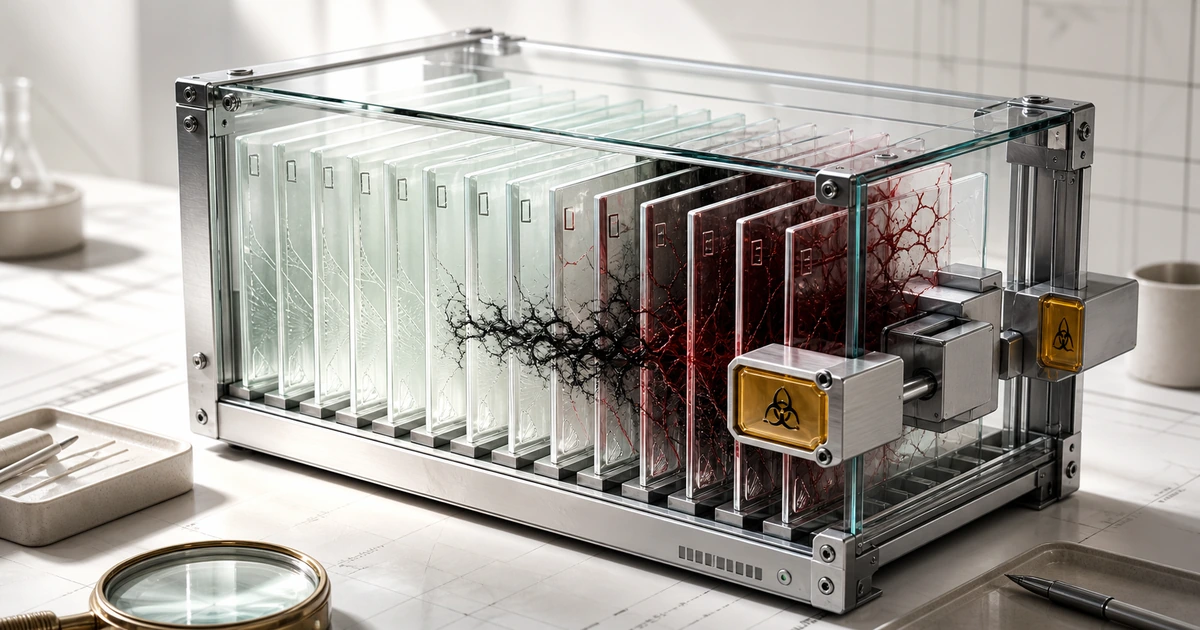
AI agents used to forget everything between sessions. That was a limitation — and, it turns out, a security feature. As builders bolt persistent memory onto agents so they can remember preferences, prior decisions, and accumulated context, they have also created a new, durable attack surface: the memory itself. Agent memory poisoning is the class of attack where an adversary plants malicious content into an agent's long-term memory so that it influences the agent's behavior later — on a future turn, a future session, or even for a different user. The newly published OWASP Agent Memory Guard project, which surfaced on Hacker News in late May 2026, treats persistent-memory manipulation as a first-class risk in agentic systems — part of a broader wave of agent-security findings that same month, from a critical supply-chain CVE in a widely used agent package to data-nuking prompt injection slipped into shared code.
If you build, deploy, or secure agents, this is the threat model to internalize now — before persistent memory becomes the default. Here is how the attack works and a concrete defensive checklist.
What is agent memory poisoning?
Agent memory poisoning is the deliberate insertion of attacker-controlled content into an agent's persistent memory store so that the content is later retrieved and acted upon as if it were trusted context.
The cleanest way to understand it is by contrast with classic prompt injection. A one-shot prompt injection lives and dies in a single request: an attacker smuggles instructions into the input (a web page, a document, a tool result), the model follows them, and when the conversation ends the influence is gone. Memory poisoning is prompt injection that persists. Instead of hijacking one turn, the attacker gets their payload written into the agent's memory — a vector store, a long-term notes file, a profile record — where it sits dormant until something causes the agent to retrieve it. At that point it shapes the agent's reasoning without the attacker being anywhere near the conversation.
The shift that matters: prompt injection is a property of an input; memory poisoning is a property of the agent's state. For the input-side foundations this builds on, see our guide to securing AI agents against prompt injection.
How does a memory-poisoning attack actually work?
Most memory-poisoning attacks follow the same four-stage chain. Understanding the stages is what lets you place defenses at the right points.
- Ingestion. The attacker gets malicious content in front of the agent in a context where the agent writes to memory. This can be a document the agent summarizes and "remembers," a support-chat message the agent saves as a user preference, a web page pulled into a RAG index, or a tool output the agent logs. The payload is usually written in natural language so it reads as legitimate notes.
- Persistence. The agent stores the content. Crucially, the malicious text is now divorced from its origin — once it lands in the memory store, the agent typically has no record that this "fact" came from an untrusted page rather than from the user or an authoritative system.
- Retrieval. On a later turn or session, a query causes the agent to pull the poisoned entry back into its working context — often via semantic similarity search, which the attacker can target by seeding their payload with the right keywords.
- Action. The retrieved content is treated as trusted context and steers the agent: it can override instructions, exfiltrate data through a tool call, suppress a safety check, or quietly bias a recommendation.
Because stages 1 and 4 can be separated by days and by different users, the attack is hard to attribute and easy to miss in logs that only inspect single requests.
Why is poisoned memory more dangerous than prompt injection?
A poisoned memory entry is worse than a one-shot injection along three axes:
- Persistence. It survives the session. A single successful write can influence every future interaction until someone finds and removes it.
- Cross-session and cross-user blast radius. In agents with shared memory — team assistants, multi-tenant copilots, agents that pool knowledge across users — one user's poisoned write can affect everyone who later triggers a retrieval of it.
- Privilege and trust laundering. Content in memory is usually treated as more trustworthy than fresh external input, precisely because the system assumes its own memory is clean. The attacker effectively launders untrusted input into trusted context.
The combination is what makes this a research-worthy class rather than a variant: it turns a momentary failure into a standing liability.
Where does agent memory poisoning happen? Real attack surfaces
Poisoning is not one feature — it is anywhere an agent reads back something it previously wrote or indexed:
- RAG stores. If your retrieval index ingests untrusted or user-supplied documents, an attacker can plant a document engineered to surface for specific queries and carry instructions in its body.
- Long-term conversational memory. Agents that distill chats into durable "user facts" or "preferences" will faithfully store a malicious instruction phrased as a preference.
- Shared / team memory. The highest-blast-radius case: pooled knowledge bases where one writer's contribution becomes everyone's context.
- Tool-output and dependency memory. Agents that cache API responses, scraped pages, or sub-agent results inherit whatever those upstream sources contain — and as the Starlette/BadHost MCP server vulnerability showed, a compromised piece of agent infrastructure can become the source that quietly feeds bad data into everything downstream.
How do you defend against agent memory poisoning?
There is no single switch. Defense is a set of controls placed along the ingestion → persistence → retrieval → action chain — the spirit of OWASP's Agent Memory Guard approach. Treat the following as a checklist:
- Validate at write time. Don't store raw untrusted text verbatim. Sanitize, classify, and strip instruction-like content before it enters memory. The cheapest poisoning to stop is the write that never happens.
- Track provenance. Tag every memory entry with where it came from (which user, which source, trusted vs. untrusted) and carry that label through to retrieval, so the agent can weight or quarantine low-trust memories instead of treating all memory as equal.
- Isolate memory by trust boundary. Don't let untrusted-source memory and authoritative memory share one undifferentiated pool. Separate per-user memory from shared memory; never let one tenant write into another's context.
- Sign or attest writes. For high-value memory, require that writes be attributable and tamper-evident, so an injected entry can't masquerade as a system-authored fact.
- Gate consequential actions. Even if a poisoned memory slips through, require human review or a second check before the agent takes irreversible or sensitive actions (payments, deletions, external sends) on the basis of retrieved memory. This is the same defense-in-depth posture covered in our AI agent security guide for 2026.
- Audit and expire memory. Log what gets written and retrieved, scan stored memory for instruction-like patterns, and expire stale entries so a payload can't lurk indefinitely.
- Defend the input layer too. Memory poisoning is downstream of injection, so the input-side hardening in our prompt injection hardening checklist is the first line that reduces how much malicious content ever reaches the write stage.
The principle underneath all of these: stop trusting your own memory by default. Treat retrieved memory as input that must be validated, not as ground truth.
Frequently asked questions
Is memory poisoning the same as prompt injection?
No. Prompt injection manipulates a single request; memory poisoning persists an injection into the agent's stored state so it affects future turns, sessions, and sometimes other users. Memory poisoning often uses prompt injection as the delivery mechanism, but the defining property is persistence.
Can RAG be poisoned?
Yes. If a retrieval index ingests untrusted or user-supplied documents, an attacker can craft a document that surfaces for targeted queries and carries instructions in its body. This is one of the most common real-world memory-poisoning surfaces.
How do I audit agent memory?
Log every write and retrieval with provenance, periodically scan stored entries for instruction-like or anomalous content, separate trusted from untrusted memory, and expire old entries. Pair this with action gating so that even an undetected poisoned entry can't directly trigger a sensitive operation.
Takeaways for builders
Persistent memory is what turns a chatbot into an agent — and it is exactly why agents need a memory threat model. Map your own ingestion → persistence → retrieval → action chain, assume anything an agent writes to memory can be attacker-influenced, and place validation, provenance, isolation, and action-gating controls along that chain. Start with the write stage (the cheapest place to stop an attack) and the action stage (the last place to catch one).
If you're hardening an agent today, pair this with our prompt injection hardening checklist, the broader AI agent security guide for 2026, and our deep-dive on securing AI agents against prompt injection. The teams that treat memory as untrusted input now will avoid relearning it the hard way later.