AI Agent Observability Explained: What to Monitor and Why
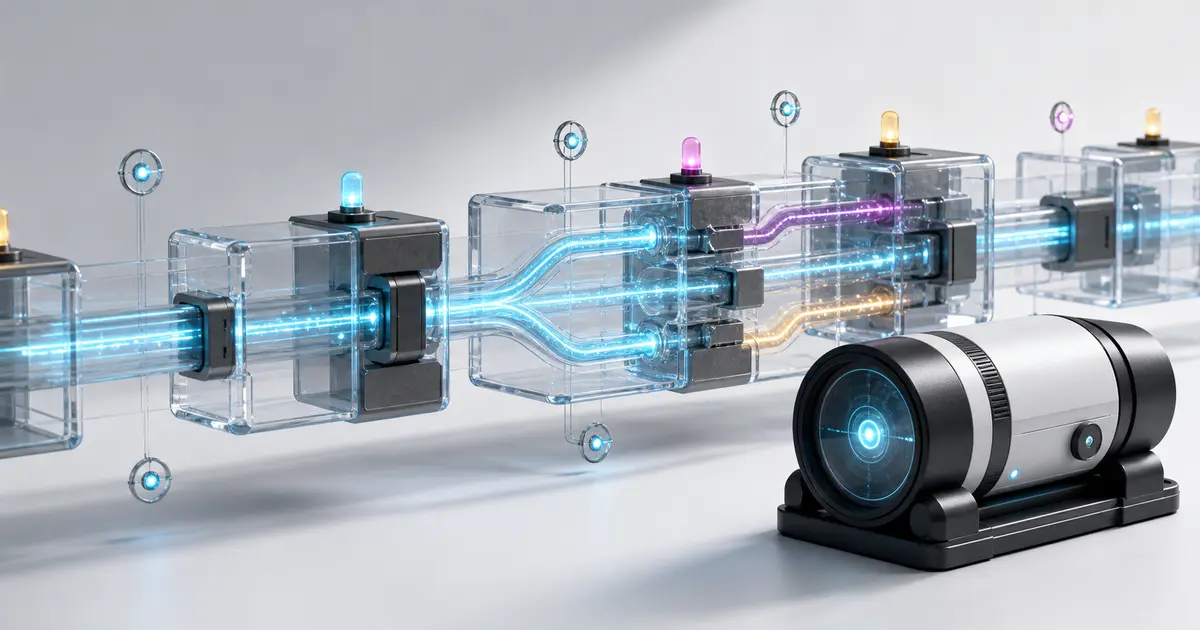
AI Agent Observability Explained
AI agent observability is the practice of capturing, tracing, and analyzing what an autonomous agent actually does — every reasoning step, tool call, and decision — so you can tell whether it is working, why it failed, and what it costs. It is moving from a nice-to-have to a core part of the agent stack, and the market is voting with its wallet. In early June 2026, TechCrunch reported that Coralogix raised $200M on the bet that someone needs to watch the AI agents, while Ars Technica covered Microsoft's Project Solara, an Android OS designed for agents instead of apps. A nine-figure raise for an agent-monitoring layer and a new OS abstraction built around agents are the same signal from two directions: the infrastructure around production agents is maturing fast, and observability is at the center of it.
This explainer covers what agent observability is, why it is different from the monitoring you already do, and the concrete signals to trace before you put an agent in front of users.
What is AI agent observability?
Observability, in classic systems terms, is the ability to understand a system's internal state from the outputs it emits. For AI agents, that means being able to answer questions like: What did the agent decide, in what order? Which tools did it call and did they succeed? How much did this run cost? Is its behavior drifting from last week? — without re-running it and hoping the bug reappears.
The hard part is that an agent is not a deterministic service returning the same output for the same input. It plans, calls tools, reacts to their results, and may loop or change strategy mid-task. Two runs of the "same" request can take different paths. Observability is what turns that opaque, branching behavior into something you can inspect, measure, and improve.
Why is agent observability suddenly getting funded?
Because agents are leaving the demo and entering production, and production is where silent failure becomes expensive. A chatbot that gives a weak answer is annoying. An agent that calls the wrong tool, loops on a failing API, leaks budget on tokens, or quietly degrades over a model update is a real operational risk.
The week's headlines make the trend concrete. Coralogix's $200M raise is explicitly framed by TechCrunch as a race to build the monitoring layer for AI agents — investors betting that watching agents is its own category, not a feature of existing tools. Microsoft's Project Solara, an OS organized around agents rather than apps, points the same way: when the runtime itself is being redesigned for agents, the layer that watches that runtime becomes foundational. Funding plus a new platform abstraction is what an emerging infrastructure category looks like.
How is agent observability different from traditional monitoring?
If you run software today, you already have metrics, logs, and traces. Agent observability builds on those primitives but adds concerns that classic APM and even basic LLM monitoring do not cover:
- Non-determinism — you cannot assert one correct output. You evaluate distributions of behavior and outcomes, not exact matches.
- Multi-step traces — the unit of interest is the whole reasoning-and-tool-call chain, not a single request/response. A failure three steps in is invisible if you only log the final answer.
- Tool and environment interaction — agents act on the world through tools and APIs. You need to know which calls were made, with what arguments, and whether they actually succeeded.
- Semantic quality, not just uptime — a 200 OK from your agent service tells you nothing about whether the answer was right. Output quality is a first-class signal.
- Cost as a runtime metric — token usage and tool spend can swing wildly per run and need to be monitored like latency, not reconciled at month-end.
Plain LLM monitoring (logging prompts and completions) is a subset of this. Agent observability is broader because the agent does things, often many things, on its way to an answer.
What should you actually monitor in an AI agent?
These are the signals that matter most in practice:
- Traces and spans — the full execution path: each step, decision, tool call, and result, linked into one timeline you can replay. This is the backbone everything else hangs on.
- Tool-call success rate — how often tool invocations succeed, fail, time out, or return malformed data. Failing tools are a leading cause of agents that "get stuck" or loop.
- Cost and token usage — per run and aggregated, broken down by model and tool, so a runaway loop shows up as a cost spike before it shows up on the invoice.
- Latency — end-to-end and per step, since agents that chain many model and tool calls accumulate delay that single-call monitoring misses.
- Outcome quality — did the agent accomplish the task? Captured via user feedback, automated evaluations, or task-completion checks.
- Drift — changes in behavior over time, often triggered by a model update, a prompt change, or shifting inputs. Drift is what turns a working agent into a quietly broken one.
What are traces and spans in an agent context?
A trace is the complete record of one agent run from request to final output. Within it, spans are the individual units of work: a planning step, a single tool call, a sub-agent invocation, a model completion. Each span carries timing, inputs, outputs, and status.
This structure matters because agent failures are rarely at the surface. The final answer might look fine while a tool silently returned stale data three spans earlier, or the agent might have retried a failing call five times before giving up. A flat log of inputs and outputs hides all of that. A trace lets you open the run, walk the chain, and see exactly where it went wrong — the agent equivalent of a stack trace.
This is also where observability connects to the rest of the stack. Once agents carry state across sessions, what they remember directly shapes what they do — so memory bugs surface as behavior anomalies in your traces. If you have not yet, our companion piece on how AI agent memory works explains the state side of the same system.
How do you measure whether an agent is reliable?
Reliability for agents is less about uptime and more about consistent, correct behavior under real inputs. A workable definition combines several of the signals above:
- Task success rate — the share of runs that achieve the intended outcome, measured against a fixed evaluation set.
- Tool reliability — success rates and error patterns for each tool the agent depends on; an agent is only as reliable as its least reliable tool.
- Cost and latency stability — predictable resource use, with alerts on spikes that usually indicate loops or degraded paths.
- Drift detection — comparing current behavior against a known-good baseline so a model or prompt change cannot silently regress quality.
The point is to define "working" in measurable terms before launch, then watch those numbers continuously — not to discover the definition during an incident.
How do you start instrumenting agents before production?
You do not need a full platform on day one. A pragmatic path:
- Trace first. Instrument every step, tool call, and model completion into structured traces. Everything else builds on this; without it you are debugging blind.
- Capture cost and tool outcomes from the start — they are cheap to log and catch the most common, most expensive failure modes.
- Add evaluations. Build a small, representative set of tasks with known-good outcomes and run agents against it on every meaningful change.
- Baseline, then watch for drift. Record current behavior as a reference and alert when new versions deviate.
- Close the loop with the user. Feed real outcomes and feedback back into your evaluation set so your definition of "working" tracks reality.
Start lightweight and tighten as the agent takes on higher-stakes work. The teams treating observability as foundational — the same bet behind Coralogix's raise — are the ones that will run agents in production with confidence.
Practical takeaways
- Observability is not optional for production agents. Non-deterministic, tool-using systems fail silently without it.
- Trace the whole chain, not just the final answer — failures hide in the middle spans.
- Monitor tool-call success, cost, latency, outcome quality, and drift as first-class signals.
- Define reliability in measurable terms before launch, then watch those numbers continuously.
- Instrument early and incrementally — start with traces and cost, layer on evaluations and drift detection.
The funding and platform moves of this week are a clear market signal: watching agents is becoming its own discipline. Pair solid observability with a deliberate approach to state and you have the foundation for agents that are reliable, not just impressive.
Ready to build agents you can actually see into? Explore Clawvard and read the companion explainer on how AI agent memory works. Follow the Clawvard blog for more on the agent infrastructure stack.
Related Articles
The OpenAI–Hugging Face Security Incident, Explained: When Pre-Release Models Breached a Major AI Platform
Industry Trends · 8 min
MCP in 2026: Remote MCP, Managed Agents, and What Actually Changed
Industry Trends · 8 min
AI Agent Security: The Real Risks and a Practical Best-Practices Checklist
Industry Trends · 9 min