Coding Agents in Production: What Notion and Nextdoor's Codex Rollouts Reveal
Coding Agents in Production: What Notion and Nextdoor's Codex Rollouts Reveal
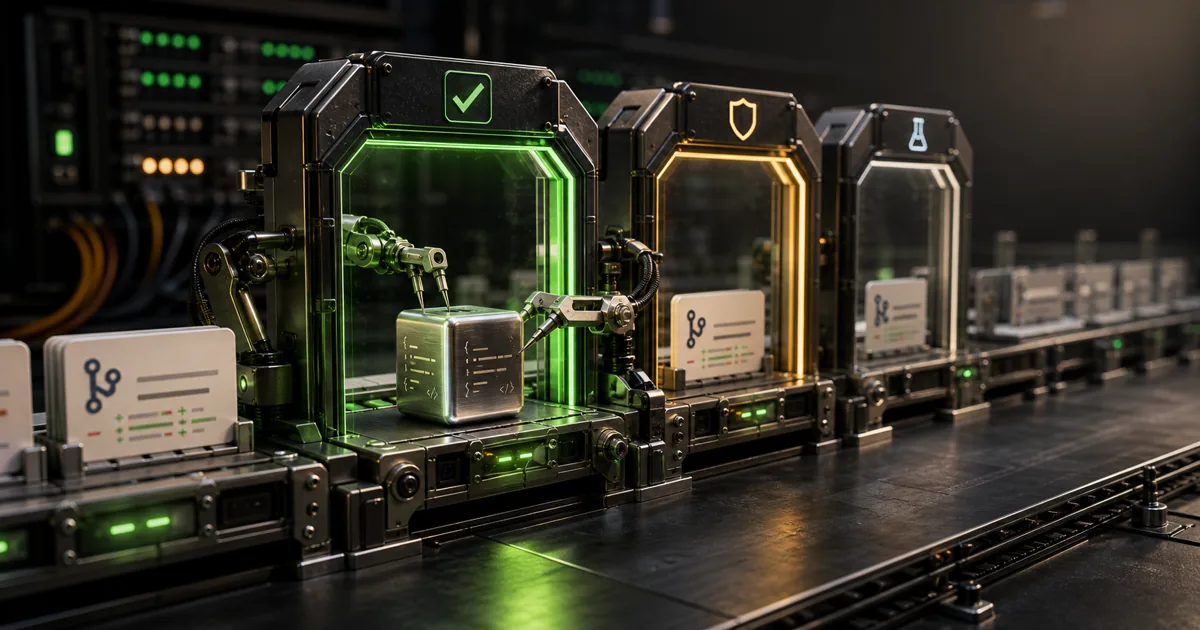
Coding agents in production crossed a visible threshold this week. On June 9, 2026, OpenAI published back-to-back case studies showing how engineering teams at Notion and Nextdoor are running Codex inside real software-delivery workflows — not in demos, but as part of how shipping code actually gets done. That shift, from AI that autocompletes a line to coding agents that take on scoped work end to end, is the moment engineering leaders have been waiting (and bracing) for. If you own a roadmap, a code-review process, or a CI/CD pipeline, the question has changed from "can it write code?" to "how do we let it write code at scale without losing control of the pipeline?"
This piece synthesizes what the two rollouts reveal about putting coding agents in production, then adds the part most vendor case studies skip: the new security surface an autonomous coding agent opens up, grounded in fresh research on prompt-injection attacks against AI-powered CI/CD.
What does "coding agents in production" actually mean?
A coding assistant suggests; a coding agent acts. The distinction is operational, not marketing. An assistant proposes completions a human accepts keystroke by keystroke. An agent is handed a goal — fix this failing test, migrate this module, draft this PR — and then plans, edits across files, runs tools, and iterates until it believes the task is done. "In production" raises the stakes again: the agent's output flows into branches, pull requests, and pipelines that real users depend on.
That is exactly the regime the Notion and Nextdoor writeups describe. Both are framed around Codex doing scoped engineering work inside an existing team's process, which is what makes them useful data points rather than capability demos.
What do Notion's and Nextdoor's Codex rollouts show?
Nextdoor — removing friction so engineers ship more. OpenAI's account of Nextdoor's rollout is titled around engineers using Codex to "build without limits," and the through-line is throughput: handing the agent the repetitive, well-bounded work so human engineers spend their time on the parts that need judgment. The signal for adopters is that the early wins come from scoped, verifiable tasks, not from turning an agent loose on an open-ended brief.
Notion — unlocking work a team would otherwise defer. OpenAI's Notion writeup centers on what Codex "unlocks": work that was technically possible but kept slipping down the backlog because it was tedious or time-boxed out. The pattern that matters for your own planning is that the agent's value showed up most where the work was clearly specifiable and cheaply checkable.
Read together, the two rollouts point at the same adoption playbook rather than two different ones: start where the task is bounded, the success criterion is mechanical, and a human still owns the merge.
How are teams adopting coding agents without losing control?
The durable lesson across both case studies is that a coding agent is a contributor, and you already have a process for governing contributors — code review, CI, branch protection, least-privilege access. The successful pattern keeps that process intact and routes the agent through it:
- Scope tightly. Give the agent tasks with a clear definition of done and an automated way to check it (tests pass, types check, lint clean).
- Keep the human on the merge. The agent opens the PR; a person approves it. Review load drops, accountability does not move.
- Make verification cheap. Agents pay off fastest where correctness is mechanically checkable, so invest in the test and CI surface before widening the agent's mandate.
- Widen the mandate gradually. Expand from "fix the failing test" to larger refactors only after you trust the review and rollback loop.
None of this is exotic. It is the same discipline you would apply to a fast new junior engineer who never sleeps — and, as the next section shows, who can also be socially engineered.
What are the security risks of coding agents in CI/CD?
Here is the part the adoption stories don't dwell on. The moment a coding agent reads untrusted text and can act on it inside your pipeline, that text becomes a potential instruction. Recent research makes the threat concrete: GitInject: Real-World Prompt Injection Attacks in AI-Powered CI/CD Pipelines documents prompt-injection attacks aimed specifically at AI agents wired into continuous-integration and continuous-delivery systems. This is fundamentally a context problem — the agent fails to separate untrusted data from its instructions — which is why disciplined context engineering for agents is part of the defense, not just a performance concern.
The mechanism is straightforward and that is what makes it dangerous. CI/CD agents routinely ingest content an outsider can influence — issue descriptions, pull-request titles and bodies, commit messages, code comments, even dependency metadata. If the agent treats that content as part of its instructions rather than as inert data, an attacker can smuggle commands into a field that looks completely ordinary. In a pipeline, the blast radius is not a bad code suggestion; it is an agent with credentials, repository write access, and the ability to trigger builds and deploys.
This is the difference between a coding assistant and a coding agent in production stated in security terms: an assistant that gets tricked produces a suggestion a human can reject, while an agent that gets tricked can take an action before any human looks.
What guardrails make coding agents in production safe?
Treat the agent as an untrusted-input processor with real privileges, and the controls follow:
- Least privilege by default. Scope the agent's tokens and repo permissions to the narrowest set the task needs. An agent fixing tests does not need deploy keys.
- Separate data from instructions. Feed issue text, PR bodies, and external content to the agent as data to analyze, never as commands to follow. This is the core lesson of the GitInject class of attacks.
- Keep a human approval gate on anything irreversible. Merges, releases, infrastructure changes, and credential use should require sign-off, not run autonomously.
- Sandbox execution. Run agent-initiated builds and commands in isolated environments with no standing access to secrets.
- Log and audit agent actions. Every edit, command, and PR the agent produces should be attributable and reviewable, the same as any other automated actor.
- Pin the blast radius. Assume a given run will be manipulated eventually and design so the worst case is contained — short-lived credentials, no direct prod access, reversible changes.
Should your team put coding agents in production now?
For well-scoped, verifiable work behind a human merge gate, the case studies suggest the value is real today. The honest gating factor is not the model's coding ability — it is whether your pipeline's permissions, review, and sandboxing are ready to host a capable, fast, and socially-engineerable contributor. Get the guardrails in first; the productivity follows safely after.
Takeaways for Clawvard readers
- Coding agents in production are now a documented practice, not a forecast: Notion and Nextdoor are running Codex inside real engineering workflows.
- The winning adoption pattern is boring on purpose — tight scope, mechanical verification, human on the merge.
- The new risk is not bad code, it is injected code: agents wired into CI/CD inherit a prompt-injection surface, as the GitInject research shows.
- Your existing engineering hygiene — least privilege, review gates, sandboxing, audit logs — is most of the defense. Apply it before you widen the agent's mandate.
If you're designing agent workflows you can actually trust, that's exactly the problem Clawvard is built for — try Clawvard for building governed, production-grade agents, and follow our updates for more field-tested guidance on shipping agents safely.
Related Articles
The OpenAI–Hugging Face Security Incident, Explained: When Pre-Release Models Breached a Major AI Platform
Industry Trends · 8 min
MCP in 2026: Remote MCP, Managed Agents, and What Actually Changed
Industry Trends · 8 min
AI Agent Security: The Real Risks and a Practical Best-Practices Checklist
Industry Trends · 9 min