GPT-5.6 vs GPT-5.5: What Actually Changed for Agent Builders
GPT-5.6 vs GPT-5.5: What Actually Changed for Agent Builders
OpenAI launched GPT-5.6 on July 9, 2026, introducing a new family of frontier models split into three named tiers — Luna, Terra, and Sol (OpenAI; TechCrunch). Within a day, Microsoft named GPT-5.6 the "preferred model" for Microsoft 365 Copilot (TechCrunch). If you build and ship agents, the question that matters isn't "is it impressive" — it's "which tier do I run, and is switching from GPT-5.5 worth the effort?" This guide cuts past the launch hype to a practical evaluation you can act on.
The launch spike will fade. What won't fade is the decision every agent team now faces: a tiered model family changes how you think about cost, latency, and capability all at once, and getting that mapping wrong is expensive at scale. So rather than recap the announcement, this is a framework for evaluating GPT-5.6 against the GPT-5.5 stack you already run.
What's in the GPT-5.6 family — Luna, Terra, and Sol
The headline structural change from a single flagship to a named three-tier family (Luna, Terra, Sol) is the most important thing for builders to internalize (OpenAI; Simon Willison). A tiered family is not just marketing: it's OpenAI telling you that one model no longer has to serve every workload. That's good news for agent economics, because most agent systems are a mix of cheap high-volume calls and a few expensive reasoning-heavy ones.
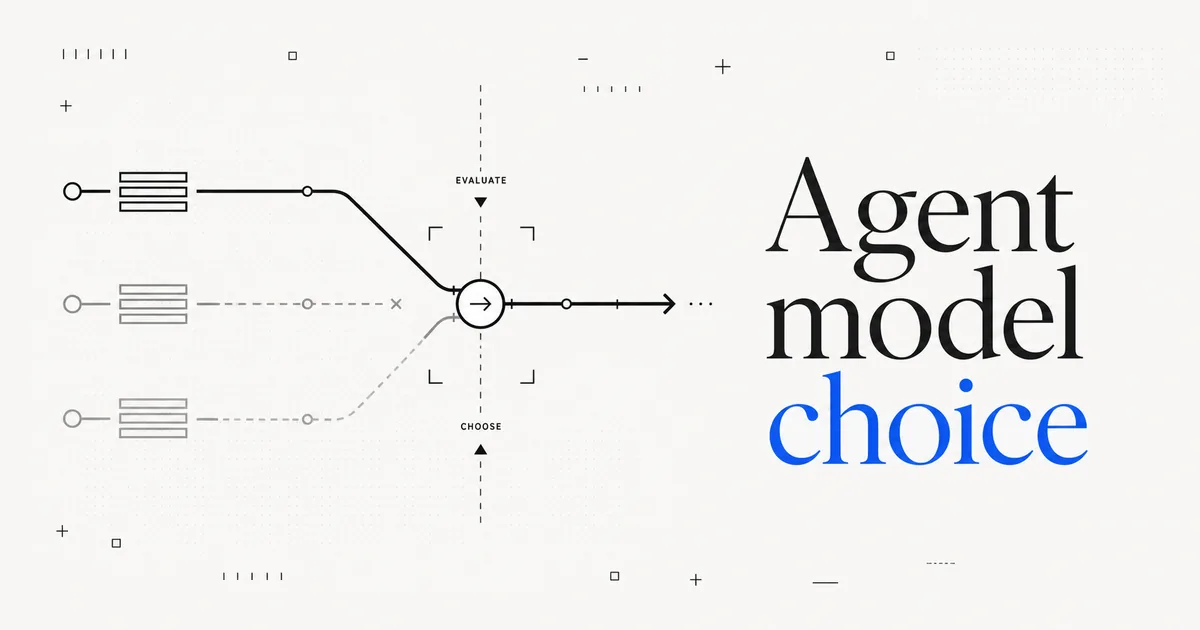
The practical implication: you are no longer choosing a model, you are choosing a routing policy across tiers. The teams that get the most out of GPT-5.6 will be the ones that map each step of their agent — classification, retrieval planning, tool selection, final synthesis — to the cheapest tier that clears the quality bar for that step.
Which GPT-5.6 tier should I use?
Treat tier selection as a per-task decision, not a per-app one:
- High-volume, low-ambiguity steps (intent classification, routing, short extractions) usually belong on the lightest, fastest tier. These dominate your token bill, so latency and price matter more than peak reasoning here.
- Core reasoning and multi-step tool use — where the agent plans, calls tools, and recovers from errors — is where a mid or top tier earns its cost, because a smarter model needs fewer retries and produces fewer silent failures.
- The hardest synthesis or long-horizon planning is the one place the top tier is worth paying for even at low volume.
Because tier naming and exact capability ordering can shift, confirm the current spec for each tier against OpenAI's official model page before you hard-code a routing table.
GPT-5.6 vs GPT-5.5: what actually changed for agents
For agent builders, "better benchmarks" is the wrong lens. What changes agent behavior is not a headline score — it's the reliability of the loop: does the model pick the right tool, format the call correctly, and recover when a tool errors?
Reasoning and tool-use behavior deltas
When you evaluate GPT-5.6 against GPT-5.5, measure the things that actually break agents in production:
- Tool-call correctness: How often does the model emit a well-formed call with the right arguments on the first try? A small improvement here compounds, because every malformed call is a retry, a latency hit, or a dropped task.
- Plan stability: On multi-step tasks, does the model hold a coherent plan or drift after a few steps? Drift is the silent killer of long-horizon agents.
- Recovery behavior: When a tool returns an error or empty result, does the model adapt or loop? This is where tier choice often matters more than model version.
- Instruction adherence under load: Long system prompts and many tools degrade adherence. Test with your prompt and your toolset, not a generic benchmark.
Is GPT-5.6 worth upgrading from GPT-5.5?
Upgrade when a controlled evaluation on your own traffic shows a real win — not because the version number went up. A defensible migration test looks like this:
- Replay a representative sample of real agent traces (a few hundred is enough to see signal) through both GPT-5.5 and each GPT-5.6 tier.
- Score task success, not token-level similarity — did the agent finish the job correctly end to end?
- Track cost and p95 latency per completed task, not per call. A model that costs more per token but needs fewer retries can be cheaper per finished task.
- Watch for regressions in your specific tool schemas and output formats — the most common migration surprise is a formatting or tool-argument change that your parser wasn't expecting.
If a GPT-5.6 tier wins on task success at equal-or-lower cost per completed task with no new regressions, migrate. If it's a wash, stay on GPT-5.5 and revisit — a launch is not a deadline.
Pricing and cost implications
A tiered family changes cost modeling more than any single price point does. The right mental model is blended cost per completed task, computed across the tiers your router actually uses, rather than a single sticker price. Two teams on the same models can see very different bills purely from how they route.
Because published prices change and vary by tier and context length, always pull current numbers from OpenAI's official pricing before you model your spend — don't budget off a launch-day figure quoted second-hand. The durable takeaway: the cheapest path to a given quality bar is almost never "put everything on the top tier," and rarely "put everything on the cheapest." It's a deliberate split.
Migrating your agent stack to GPT-5.6
A clean migration is boring on purpose:
- Abstract the model behind a config value so you can swap tiers per agent step without code changes. If your agent code hard-codes a model string, fix that first.
- Roll out behind a flag and shadow-run GPT-5.6 against live GPT-5.5 traffic before you cut over.
- Migrate the expensive reasoning step first, where a smarter model pays for itself, then push high-volume cheap steps down to the lightest tier that still passes.
- Keep GPT-5.5 as a fallback during the transition so a regression is a config flip, not an incident.
- Re-run your eval suite on every tier change — a tiered family means more moving parts, so your regression net has to be tighter than before.
Where you run that migrated stack matters as much as which model you pick. If you're weighing whether to host the orchestration yourself or let a platform run it, see our companion piece on managed agents in 2026 — model choice and deployment choice are two halves of the same decision.
FAQ
What is GPT-5.6?
GPT-5.6 is OpenAI's frontier model family launched on July 9, 2026, split into three named tiers — Luna, Terra, and Sol — so different workloads can run on different capability/cost points instead of a single model (OpenAI; TechCrunch).
How much does GPT-5.6 cost?
Pricing varies by tier and changes over time, so check OpenAI's official pricing for current numbers. For agents, the figure that matters is blended cost per completed task across the tiers your router uses — not the per-token price of any single tier.
Is GPT-5.6 better than GPT-5.5 for agents?
It can be, but "better" is workload-specific. Validate it by replaying your own agent traces through both and scoring end-to-end task success, tool-call correctness, and cost per completed task — then migrate only if a tier wins without new regressions.
Which GPT-5.6 tier is best for high-volume agent steps?
Route high-volume, low-ambiguity steps (classification, routing, short extractions) to the lightest, fastest tier, and reserve heavier tiers for core reasoning and hard synthesis. Confirm current tier specs on OpenAI's model page before locking in a routing table.
Takeaways for builders
- GPT-5.6's biggest shift is structural: a three-tier family turns "pick a model" into "design a routing policy."
- Evaluate on agent-relevant signals — tool-call correctness, plan stability, recovery — not headline benchmarks.
- Decide migration with a trace-replay test scored on task success and cost per completed task, not the version number.
- Model choice and deployment choice go together — read the companion on managed agents in 2026 next, and try the same routing discipline on Clawvard.